Results from a research study were published in January 2026, surmising a 12-week randomized clinical trial which found a five-mushroom blend lowered cortisol, anxiety, and fatigue while improving the sleep quality of its subjects. Here's what it means.
Research Findings: Mushrooms Cut Stress, Fatigue & Boost Sleep
Chronic stress, poor sleep, and low energy are some of the most common complaints people bring to their doctor — and some of the hardest to treat with a single solution. A new randomized, double-blind, placebo-controlled trial published in Brain and Behavior (January 2026) adds fresh clinical data to the growing interest in medicinal mushrooms as adaptogens, testing a proprietary five-mushroom blend called Restake over 12 weeks in adults with moderate to severe stress symptoms.
What the Study Tested
Researchers in Malaysia enrolled 50 adults (ages 22–55) who reported at least three stress-related symptoms — headaches, poor sleep, exhaustion, or a racing heart at rest. Participants took either Restake (500 mg/day, standardized to over 30% beta-glucan) or a matching placebo for 12 weeks. Outcomes were tracked with validated tools (including the Pittsburgh Sleep Quality Index and State-Trait Anxiety Inventory) and blood biomarkers — cortisol, ACTH, norepinephrine, melatonin, and CRP.
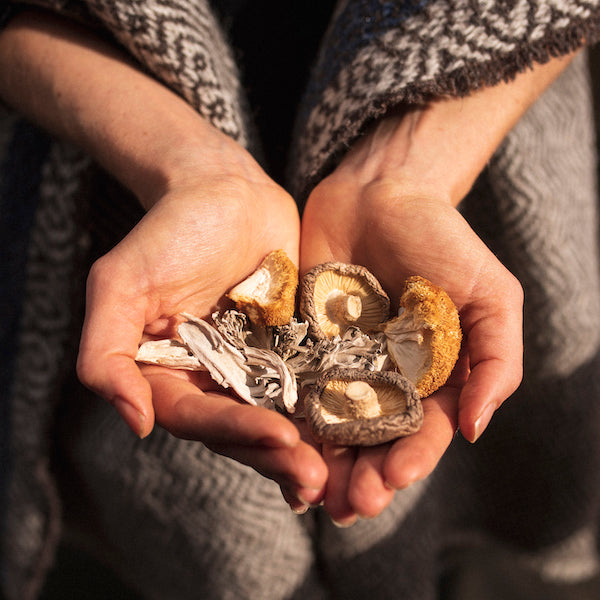
The blend combined five well-studied species: Lion's Mane (hericium erinaceus), Cordyceps (cordyceps militaris), Reishi (ganoderma lucidum), Shiitake (lentinula edodes), and Maitake (grifola frondosa).
What Each Mushroom Contributes — And Where You'd See It in Tea
Each species has its own research history, and each is also familiar in single-mushroom form — most commonly as extracts and powders:
-
Lion's Mane — Linked to nerve growth factor (NGF) stimulation and improved mood and sleep via BDNF and serotonin pathways. It's one of the most common single-mushroom teas on the market, typically at far lower concentrations than the standardized extract used in this trial.
- Learn more about Tamim Teas featuring Lion’s Mane mushrooms
- Cordyceps — Associated with cellular energy production and exercise tolerance in prior research; often sold as a stand-alone, energy-focused tea or tonic.
-
Reishi — The most extensively studied of the five, with antioxidant, anti-inflammatory, and sleep-supportive effects tied to gut-microbiota and serotonin pathways. Widely available as a calming, bedtime-style tea.
- Learn more about Tamim Teas using Reishi mushrooms
-
Shiitake — Polysaccharides here are linked to anti-fatigue and anti-inflammatory effects; less common as a standalone tea, and most often used in culinary or broth form.
- Learn more about Tami Teas featuring Shiitake mushrooms
-
Maitake — Studied for mood and metabolic effects; sometimes found in immune-support tea blends.
- Learn more about Tamim Teas using Maitake mushrooms
It's worth noting these single-mushroom teas typically deliver much lower, less standardized doses than the concentrated five-blend tested here, so their effects — while plausible based on the underlying research — were not studied exclusively as part of the trial.
Key Findings
- Anxiety and depression improved. Both STAI-S and BDI scores dropped significantly more in the treatment group by 6 and 12 weeks.
- Cortisol and ACTH fell within 6 weeks, with minimal change in the placebo group.
- Physical fatigue improved the most — down nearly 9% by week 12.
- Sleep quality improved steadily, with PSQI scores falling 11% versus almost no change in placebo.
- CRP dropped and melatonin trended upward, though the melatonin change wasn't statistically significant.
- No safety concerns — liver, kidney, blood, and glucose markers stayed within normal ranges.
Why It May Work
Researchers point to beta-glucans — polysaccharides common to all five mushrooms — as a likely driver, given their known role in modulating immune signaling and inflammation. Individually, these mushrooms have separately been linked to effects on the HPA axis, nerve growth factor, and neurotransmitter activity, which may help explain the blend's combined impact on mood, energy, and hormone levels.
Worth Knowing
This is a single study with some limitations: a small sample (25 per group), a 12-week window, and — notably — funding from the company that manufactures Restake. That doesn't invalidate the results, but it's worth disclosing whenever this research is cited. Larger, independently-funded trials would strengthen confidence in these findings.
Final Thoughts
This trial adds meaningful evidence that a standardized, beta-glucan-rich mushroom blend can measurably reduce stress hormones, ease anxiety and depression, and improve sleep, with a strong safety profile. The individual mushroom benefits making up the blend have their own supporting research and are familiar in everyday forms like tea and coffee.
So what are you waiting for? Try some of our signature mushroom tea blends (sample are a great start!) sourced from U.S. family farms, and made with 100% organic ingredients.
*These statements have not been evaluated by the U.S. food and drug administration.